Dutch (Flemish) Certified Translation
Need Dutch (Flemish) certified translation? Our office in Kızılay, Ankara renders your Dutch (Flemish) documents into Turkish — or from Turkish into Dutch (Flemish) — with full official validity. With Belgium (the Flemish region), demand arises from official, commercial and migration ties with Belgium.
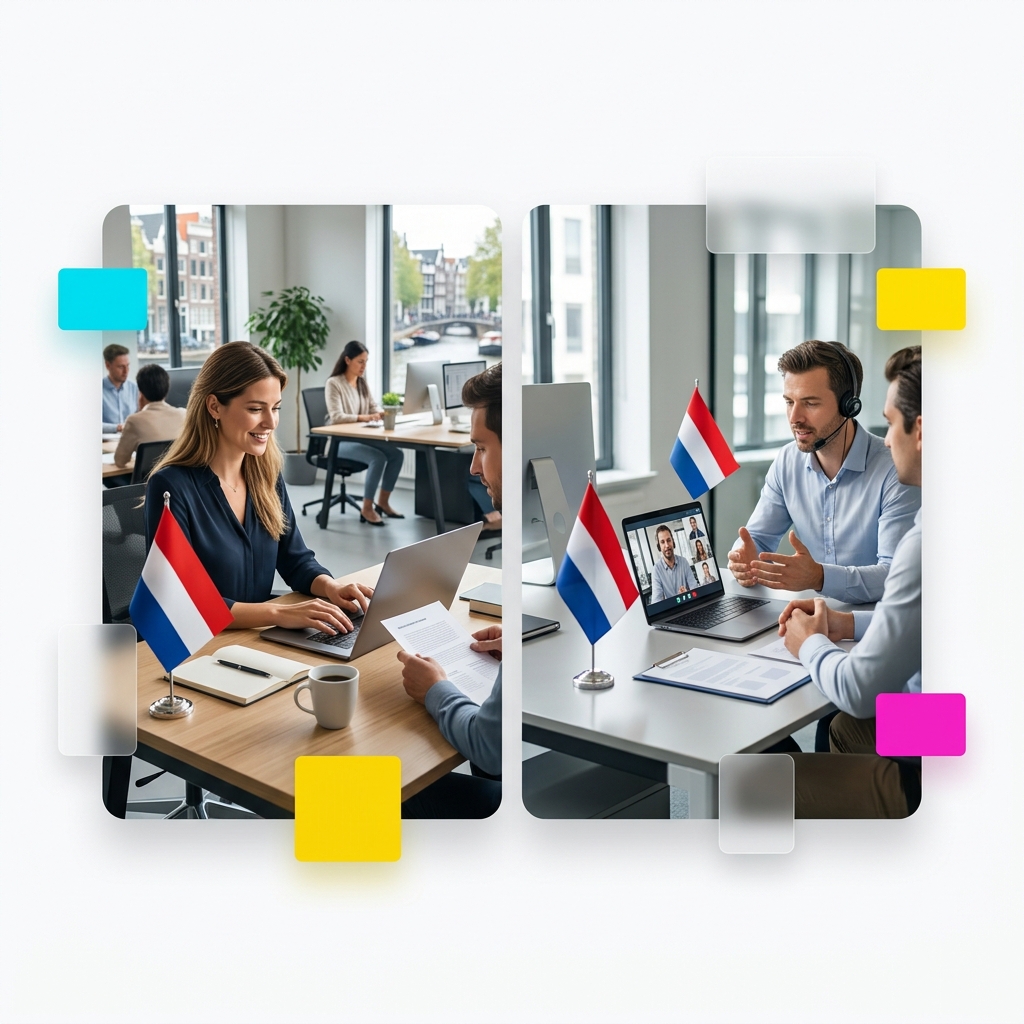
Translating a document clearly is not enough on its own; it must also match the format, terminology and approval chain that official authorities expect. On this page you will find the scope of our Dutch (Flemish) certified translation service and answers to frequently asked questions.
What Is Dutch (Flemish) Certified Translation and Why Does It Matter?
A certified (sworn) translation is one a translator — having taken an oath before a notary — confirms with their stamp and signature; this approval gives the translation official status. It matters especially for Dutch (Flemish), because documents originating in Belgium (the Flemish region) carry their own official formulas.
We route your Dutch (Flemish) projects not only to language experts but to translators who know the official register and sector jargon of the country the document comes from.
Which Dutch (Flemish) Documents Require Certified Translation?
Dutch (Flemish) documents submitted to public bodies, consulates, universities and courts gain validity with a sworn signature and, where required, notarization. The most frequently requested types are:
- Civil and official documents: birth, marriage and population/registry records.
- Educational documents: diplomas, transcripts, equivalency files and reference letters.
- Judicial and legal papers: criminal-record certificates, powers of attorney and court decisions.
- Sector-specific documents: Belgian residence/registry documents.
- Sector-specific documents: commercial paperwork.
Dutch (Flemish) Translation by Area of Expertise
Every discipline has its own language, so we assign your Dutch (Flemish) projects to specialist translators.
Legal Dutch (Flemish) Translation
Contracts, court decisions and arbitration files are translated with attention to the conceptual differences between legal systems.
Medical Dutch (Flemish) Translation
Discharge summaries, clinical research and marketing-authorisation documents are handled by physician/pharmacist-background translators fluent in medical terminology.
Technical Dutch (Flemish) Translation
Manuals, specifications, CE and patent documents are translated in full compliance with sector terminology and unit standards.
Academic Dutch (Flemish) Translation
Articles, theses and equivalency files are delivered publication-ready, in line with the target institution’s style guide.
To convey idioms and cultural nuance in full, we entrust Dutch (Flemish) translations wherever possible to native speakers of the target language, so the text never reads like a translation.
What We Watch For in Dutch (Flemish) Translation
In Dutch (Flemish) translation, factors such as differences between Belgian Flemish and Netherlands Dutch are prone to error in inexperienced hands. Rendering proper names and institution names correctly is critical so the document is not rejected; we manage these details with our specialist translator-and-reviser team.
Common Challenges in Dutch (Flemish) Translation
Documents originating in Belgium (the Flemish region) often raise difficulties: differences between Belgian Flemish and Netherlands Dutch, finding the right equivalents for institutions and titles, and adapting date and number formats. Inexperienced translations fail exactly here; we eliminate that risk systematically with a specialist translator and an independent reviser.
Not every Dutch (Flemish) document calls for the same level of formality; a commercial e-mail and a court decision demand different registers. We choose the correct level of formality for the purpose of the text.
Individual and Corporate Dutch (Flemish) Solutions
For individual clients we prepare the Dutch (Flemish) documents needed for visa, education, immigration and family matters quickly and affordably; for businesses we work with framework agreements, term consistency and a dedicated project manager.
Whether it is a single page or a project of hundreds of pages, we apply the same quality and confidentiality standard.
Dutch (Flemish) Certified Translation: Our Workflow
To make quality a matter of process rather than luck, we apply a consistent flow that protects both speed and accuracy:
- 1. Assessment: We review the document and confirm scope, price and timing.
- 2. Translation: A subject-matter specialist handles the work.
- 3. Revision: An independent reviser checks terminology and meaning.
- 4. Certification: Notarization and apostille are arranged where necessary.
- 5. Delivery: Your document reaches you ready to submit.
For urgent cases, our expedited track shortens turnaround without compromising quality.
Our Quality Process: ISO 17100 and Three-Stage Control
We run every project in line with ISO 17100, the most widely recognised translation-quality standard. It ensures that Dutch (Flemish) translation is never left to a single person’s discretion:
- Translation: by a subject-matter, native-level translator.
- Revision: an independent reviser compares source and target sentence by sentence.
- Final QA: a closing quality and formatting check before delivery.
This three-stage structure secures our zero-error principle and terminology consistency; our translation memory keeps the same terms identical even across separate documents.
Official Approval: Notary Certification and Apostille
For a translation to gain official status, being correct is not enough; it must also pass the right approval chain. Within Dutch (Flemish) certified translation, the translation becomes ready for international circulation after sworn certification and notarization, and an apostille where required.
Apostilles are issued by the Governor’s/District Governor’s office for administrative documents and by the courthouse for judicial documents. We handle all of these steps on your behalf in Ankara and deliver your document turnkey.
Some institutions accept a sworn translator’s certification, while most official applications require notarization. We determine the correct level based on the institution you will submit to.
Online machine translation, misspelled names and institutions, and a missing apostille are the leading reasons documents get rejected.
Serving All of Türkiye from Ankara
Our head office is in Kızılay, Ankara, but our digital workflow lets you receive service from any province. Just share a clear scan; the certified output reaches your address by courier.
Pricing and Turnaround
The cost of Dutch (Flemish) certified translation is based on document volume (characters/pages), urgency and the type of approval (sworn, notarized or apostilled). Our pricing is transparent from start to finish; you see the full cost at the quote stage. For a fair calculation, most projects are priced per 1,000 characters without spaces.
Standard documents are usually delivered in 1–2 business days, and urgent jobs the same day. Notary and apostille fees are paid to third-party authorities and shown as a separate, transparent line in the quote. For regular needs we offer volume-based corporate rates.
The Difference Professional Service Makes
On an official document the goal is not merely to convert words but to preserve legal and administrative validity. Amateur or automatic translations cause rejection through wrong transliteration, missing approvals and formatting errors.
In professional certified translation, term accuracy, a second check, the necessary approvals and strict confidentiality are standard — so you lose neither time nor money.
Confidentiality, Trust and Accountability
Documents that reach us during Dutch (Flemish) certified translation often contain personal data, trade secrets or legally sensitive information. Confidentiality is not an add-on for us — it is the foundation of the work; on request we sign an NDA before starting.
Your documents are stored on 256-bit encrypted infrastructure, and everyone on our team is bound by a confidentiality undertaking. At the end of the project your data is, at your request, permanently deleted.
Documents We Accept and Delivery Options
There is no complex process to send a document: a clear photo, a PDF scan or a Word/Excel file is enough for most cases. We deliver the output as an e-signed PDF, an editable file or a wet-signed original, depending on your needs.
For notarized and apostilled work, wet-signed documents are sent by courier; in-person pickup is available within Ankara. For technical documents we preserve the page layout (DTP).
Not Just Translation — Cultural Fit
A good translation carries meaning, not just words. In Dutch (Flemish) certified translation we localise the text with attention to idioms, official formulas and the tone the destination country expects, so your document never reads as foreign.
Dates and number formats, titles, institution names and forms of courtesy are adapted to the target language. These details may seem small, but they directly shape how professional your document looks to officials and readers.
Why Choose Us?
What sets Holland Tercüme apart are measurable, concrete advantages:
- Domain expertise: every document is handled by a specialist in its field.
- Double check: high accuracy through independent revision.
- Privacy: contractual confidentiality and encrypted storage.
- On time: we keep our word, with no delays.
- Transparent pricing: clear from the start, no surprises.
Our strongest reference is the clients who keep coming back year after year; we aim to be a long-term solution partner, not a one-off supplier.
Frequently Asked Questions
In which directions do you provide Dutch (Flemish) certified translation?
We provide certified, notarized translation both from Dutch (Flemish) into Turkish and from Turkish into Dutch (Flemish), complying with the formats Belgium (the Flemish region) authorities expect.
What is the difference between Dutch (Flemish) certified translation and a notarized translation?
In short: sworn certification rests on the translator’s authority, while notarization is an official attestation. In practice most institutions require a notarized document; some accept a sworn signature alone. We clarify your need from the outset and guide you to the right approval so your document is not turned away.
Do I need to bring my document in person?
No; for most cases a clear scan or photo of your document is enough. Only for certain notary and apostille procedures that act on the original will we let you know in advance. You can run the whole process remotely from anywhere in Türkiye and receive the certified output by courier.
How fast is delivery?
Standard documents are usually ready in 1–2 business days. For urgent cases — visa, customs, health — a same-day option is available. For multi-page, high-volume projects we plan the deadline without compromising quality and confirm it clearly at the quote stage.
Do you also handle the apostille?
Of course. We handle translation, notarization and the apostille/consular steps in full; you deal with a single point of contact. We determine the correct legalization path for the destination country and deliver the document submission-ready.
How can I pay?
We offer practical payment methods, primarily bank transfer/EFT. Corporate clients can work with consolidated monthly invoicing. Whichever you choose, you see the amount you will pay — in writing and in full — before work starts.
How is the confidentiality of my documents protected?
Every project is covered by a non-disclosure agreement (NDA). Your documents are stored on 256-bit encrypted infrastructure, accessed only by the experts on the project, and permanently deleted at your request once complete. Nothing is shared with third parties except where legally required.
What happens if there is an error in the translation?
In such a case we review your feedback quickly and make in-scope corrections at no extra cost. Our aim is not to close the matter but to fit the document precisely to your and the institution’s expectations.
Will an institution abroad accept your translation?
Yes. Documents prepared with a sworn translator’s certification, notarization and apostille carry international validity. Based on whether the destination country is party to the Hague Convention, we determine the correct approval chain from the start and deliver the document in the format the relevant institution expects.
Get Your Free Quote Now
If you are wondering what your Dutch (Flemish) certified translation will cost and when it will be ready, don’t wait. Share your document and we will offer the most suitable solution with a clear price and a realistic delivery date. For urgent matters we can also consider our same-day option. Our quote is completely free and places you under no obligation.
For your Dutch (Flemish) certified translation, simply send your document and let our Ankara-based team prepare your no-obligation quote shortly.
The right partner for your documents
We manage your entire sworn translation, notarisation and apostille process from a single point — accurately and on time.